

Halloween is the most wonderful time of the year, with crisp autumn air, glowing jack-o’-lanterns, and rustling leaves in brilliant shades of orange, red, and yellow. It’s also the perfect opportunity to unleash your creativity with a costume that lets you become someone else for the night. And if you’re a history buff, it’s a chance to step into the shoes of your favorite historical figure. So why not travel back in time this fall with these fun historical Halloween costumes?
Rosie the Riveter
Rosie the Riveter is a historical icon that demonstrates how badass women have been throughout history. While she wasn’t a real person, Rosie represents the millions of women who entered the workforce during World War II. When the men went off to fight for freedom, women took control of the home front and worked in manufacturing factories to produce war goods. What, you thought only men knew how to make bomber planes?

Rosie first appeared in the 1942 “We Can Do It!” poster by the Westinghouse Company’s War Production Coordinating Committee. The committee hired artist J. Howard Miller to design a series of posters to recruit workers and promote the war effort. Rosie has since become a cultural icon symbolizing women’s strength and tenacity.1
To become Rosie the Riveter, you’ll need a red polka dot headband, bright red lipstick, and a whole lotta attitude. You can recreate her factory uniform with modern-day coveralls. If the idea of wearing a onesie doesn’t thrill you, then opt for a chambray button-up with your favorite pair of jeans. Don’t forget your Westinghouse collar pin for some authenticity.


Marie Laveau
Tap into that Halloween magic by transforming into Marie Laveau, the Voudou Queen of New Orleans.2 Born in 1801, Marie was a free Creole woman of mixed African and European ancestry.3 She became a Voudou priestess sometime in the 1820s and reigned as Queen until her retirement in the early 1870s. During her heyday, she was believed to have held weekly Voudou services in her home, performed “work” for clients, such as making charms and gris-gris, and led the St. John’s Eve ceremonies on Lake Pontchartrain. Her legacy only grew after she died in 1881, and her tomb in St. Louis Cemetery No. 1 became a mecca for Voudou devotees.
Reconstructing Marie Laveau
According to her daughter, Philomène Glapion Legendre, there were no paintings or photographs of Marie Laveau. Since there is no existing portrait of the Voudou Queen, we can use descriptions of Marie and contemporaneous images of New Orleanian women of color to get an idea of what she might have looked like.

In 1786, free women of color were ordered to wear a tignon, a headscarf imported from Madras, India. The tignon, worn by slaves, was intended to devalue free women of mixed ancestry and differentiate them from white women. Instead, it became a fashion trend that enhanced their beauty. Therefore, Marie Laveau most likely wore colorful tignons in her day. Fictitious and embellished accounts of Marie claim she wore hers tied in seven knots, each pointing upwards. While this probably wasn’t true, you can wear your tignon in seven points if you’d like.
In the 1870s, there was likely a second Marie Laveau, the successor of the first. Interviews with elderly black New Orleanians in the 1930s tell us that this Marie dressed like other Creole women of color, wearing a tignon, dresses, and long skirts. She was also quite fond of jewelry, especially diamonds and gold.4
The Voudou Queen Look
The portrait of a Creole Woman Wearing a Madra Tignon dating to 1837 is often billed as Marie Laveau. While we know this isn’t really her, the painting is a nice visual reference and matches written descriptions of both Maries. To complete your ensemble, you can use any black dress or black shirt-and-skirt combo. Grab a pashmina shawl to match your tignon, like the woman in the painting. Don’t forget some gold hoops to complete the look.
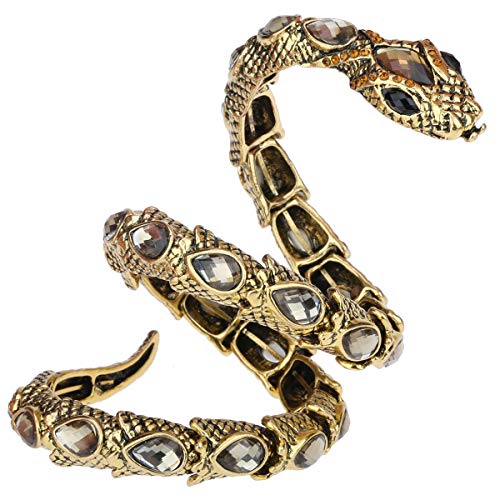
Finally, add a fun snake bracelet to pay homage to Grand Zombi, Marie’s supposed serpent deity. Because of conflicting accounts, we don’t know if she really had a snake for her Voudou rituals, but this is Halloween, so have some fun with it.


Harriet Tubman
Another historical icon is Harriet Tubman, abolitionist and conductor of the Underground Railroad. She was born into slavery in 1822 as Araminta “Minty” Ross (Harriet Tubman was her married name). At age 13, Harriet suffered a skull fracture, resulting in headaches and seizures for the rest of her life. She also experienced vivid hallucinations, which she interpreted as religious visions from God.

In 1849, she escaped bondage in her native Maryland and made her way to Pennsylvania. While in Philly, Tubman became involved with the abolitionist movement and the Underground Railroad. As a conductor, she led enslaved people to freedom through a secret network of routes and safe houses. She had her first run in 1850 when she led her family and friends to freedom.
During the Civil War, Tubman became a Union Army nurse, scout, and spy. In 1863, she led black troops in the Combahee River Raid in South Carolina, resulting in burned plantations and hundreds of freed enslaved people. If you want to see how badass she really was, check out Timeless, Season 2, Episode 9: “The General.” Our girl Harriet died in 1913 at age 91.5
Unlike Marie Laveau, we have photographs of Harriet Tubman. All you need is a simple, modest black dress and a white scarf around the neck. Alternatively, you can substitute the scarf for a bandana, as Harriet was known to wear them on her head. Complete the look with a lantern to symbolize the Underground Railroad—lanterns were used to signal freedom seekers that the location was a safe house.


Edgar Allan Poe
Get in the Halloween spirit by dressing as the master of the macabre, Edgar Allan Poe. This beloved author was born in Boston on January 19, 1809. His life was depressing AF, which is probably why he was so good at writing about horror, psychological terror, and death.
Orphaned at the age of 2, Poe was taken in by John and Frances Allen, a couple from Richmond. He attended the University of Virginia but soon dropped out because of financial constraints. He also developed a bad drinking problem that plagued him for the rest of his life.

After his brief stint at university, Poe joined the army a couple of times but was ultimately court-martialed and discharged for grossly neglecting his duties. He moved around a lot, from Boston to Baltimore, then back to Richmond, and then to New York and Philadelphia, then back to Richmond again. You get the idea.
Throughout his itinerant life, Poe published poetry, short stories, and criticisms. He worked as a staff editor for several magazines and even launched his own serial publication. In 1845, The Raven hit the press and made Poe an overnight success.
When It Rains, It Poes
His personal life, however, was always a bit iffy. He was known to suffer from depression and alcoholism. When he was 27, he fell in love with and married his 13-year-old cousin, Virginia. Yeesh. It didn’t end well because Virginia died of tuberculosis in 1847. Just a couple of years later, Poe died under mysterious circumstances at the age of 40 in Baltimore on October 7, 1849.6
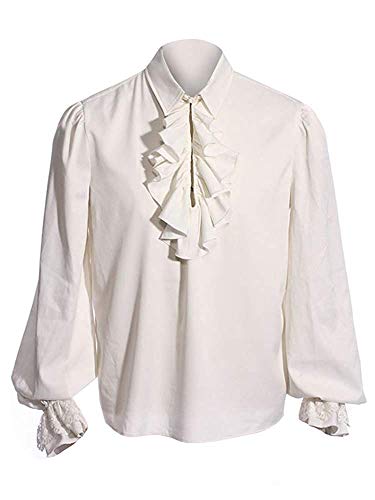
Step into the shoes of Edgar Allan Poe with a steampunk tailcoat jacket. You can always reuse this fine piece of clothing for your next My Chemical Romance concert. Grab a ruffled shirt that looks like it’s from the Victorian age and pair it with a black neck scarf. Essential accessories include an old-timey mustache and a raven shoulder prop that gives you an excuse to yell “nevermore” all night.



Plague Doctor
Halloween is a night when the veil lifts between the world of the living and the dead. Why not tap into the holiday’s darker side by dressing as a plague doctor? These historical physicians were often considered harbingers of death because their presence in a town or village meant the plague had come to claim lives. Since plague doctors were active in the Middle Ages and the Early Modern Era, the treatments they used were pretty gnarly. We’re talking about draining blood (bring on the leeches!) and medications used to induce vomiting. These dudes were trying to balance the 4 bodily humours of blood, yellow bile, black bile, and phlegm. According to ancient and medieval medicine, if one of the four was out of whack, disease would follow.
While the Black Death hit Europe in 1347, the plague doctor costume we all know and fear didn’t come around until the 17th century. That’s because the plague just kept coming back…seriously, there were epidemics for centuries. The “costume” first appeared in a 1619 description by Charles de Lorme, a French court physician. He believed the outfit would protect the wearer from contagion.

The plague doctor became a favorite costume in Venice’s Carnevale celebrations, sparking a historical debate over whether the costume originally belonged to a fictional character that inspired real plague doctors.
The Doctor Is In
To recreate this creepy costume, you’ll need a long cloak or jacket, dark pants, dark boots, a black hat, and black gloves. Plague doctors often wore all leather, but you do you. They also carried wands or staffs so they wouldn’t have to touch patients during examinations. Therefore, a nice staff prop would do nicely.
Perhaps the most iconic part of the ensemble is the beaked mask, which often included glass or crystal over the eyes for protection. Real plague doctors filled the beak with herbs, flowers, and other strong-smelling substances to prevent disease from miasma. Another theory of medieval medicine was that miasma—or bad-smelling air—spread disease.7 For your costume, just use a cool-looking mask without any smelly stuff in it.


If you are a die-hard Halloweenie, check out my other holiday-related posts here.
Footnotes
- NARA. “‘We can do it!’” ↩︎
- Voudou was both a religion and a system of magical practices in 19th-century New Orleans. By the early 20th century, its spelling changed to voodoo (with no capitalization). ↩︎
- Creole is a term referring to people born in a French and Spanish colony, like Louisiana, before the Americans took over. Creoles spoke French, were Roman Catholic, and could be any race. In 19th-century Louisiana, a person of mixed racial background like Maria Laveau was called a person of color. ↩︎
- Long, A New Orleans Voudou Priestess, 19-21, 56-57, 193-194. ↩︎
- Tate and Jerry, “Harriet Tubman.” ↩︎
- Poe, Complete Stories and Poems. ↩︎
- Black, “Plague Doctors”; Britannica, “Plague Doctor.” ↩︎
Bibliography & Further Reading
Black, Winston. “Plague doctors: Separating Medical Myths from Facts.” Live Science. Accessed May 19, 2020.
Britannica. “Plague Doctor.” By Alison Elridge. Accessed August 4, 2026.
Long, Carolyn Morrow. A New Orleans Voudou Priestess : The Legend and Reality of Marie Laveau. University Press of Florida, 2006.
National Archives and Records Administration. “‘We can do it!,’ ca. 1942.” National Archives. Last modified October 3, 2024.
Poe, Edgar Allan. Complete Stories and Poems of Edgar Allan Poe. Doubleday, 1984.
Tate, Angela, and Romya-Jenevieve Jerry. “Harriet Tubman: Life, Liberty and Legacy.” National Museum of African American History and Culture. Accessed March 4, 2022.


Leave a Reply